Malignant shame

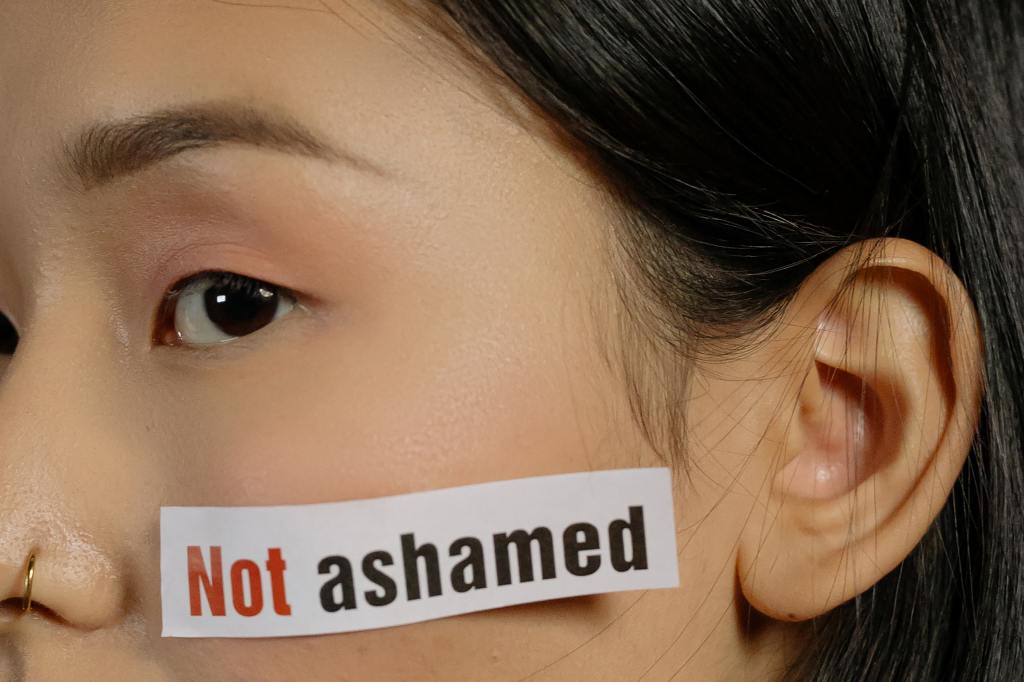
Malignant shame and how to overcome it. Photo credit: cottonbro on pexels.com

I want to share something that has been hurting me my entire life and perhaps it might be relatable.

Shame and guilt.

I grew up witnessing people take advantage of my parents’ kindness and generosity. Whether it was their money, time, help, positive emotions – they used and abused it.

I don’t want to paint too dramatic a picture but it did affect me to the point that at 31 years of age, I feel incredibly stressed around people who I think might take advantage of me.
It is hard for me to trust people and I only want to do good things as long as it’s not at the expense of my own well-being.

When I was growing up, and guests would come visit (the kind of guests who I knew were not genuine), I would stay in my room refusing to come out and say hi.

Yes, it was a form of anti-social, weird behaviour.

And my parents shamed me for that big time. They used the word “nekrasivo”, which roughly translated from Russian means “impolite”.

Needless to say, I felt inadequate. I questioned whether I was doing the right thing or whether they were correct in calling out my actions. But I couldn’t make myself pretend I liked them. I just couldn’t. I still can’t pretend, all my emotions are written in bold caps lock all over my face and in my body language, my energy.

Many years past, none of those guests is our friend now. They got what they wanted and never had another reason to talk to us. Some of them were our relatives, some – friends, colleagues, business partners.

Yet my inadequate antisocial behaviour stayed with me. And instead of my parents I now have other people around me shaming me for that, saying I’m not “normal”, I’m not adequate, I’m impolite, I’m rude, I should be ashamed.

And it is true that I need to own up to my actions and admit that I don’t always treat people nicely because of my childhood. I am excessively cautious, sometimes excessively nice and then abruptly distant.

I need to work through it with an expert because it does affect my life and relationships with the loved ones, I might be hurting people’s feelings as a result, too.

However, I refuse to be shamed. I refuse to accept that I am an inadequate, antisocial, rude human being.

I refuse to feel guilt – taking responsibility is not a problem at all but feeling guilty for the pain I carry inside like every other person is not something I can subscribe to.

Instead of feeling guilty and ashamed, take responsibility. Don’t look back, look forward. You are enough.

Self-Love Academy

Nobody knows that I am my own biggest critic, harshest judge, that I sometimes drown in self-doubt especially after doing something that has even a 1% chance of hurting someone else.

There are still a lot of things I can improve about myself, and things I can get rid of as they’re not a genuine part of me but an acquired habit.

And I want everyone to know that while we may be imperfect and make mistakes, hurt others’ feelings unintentionally as a result of our own inner struggles, it is not really us. It’s our baggage. We at the core are enough, we are perfect.

And the more we accept ourselves as perfect and enough, adequate and normal, the better we become. No matter what anyone says or thinks, the only way out of shame, guilt and misery is knowing that I am enough. I am normal. What I feel is normal.

The only way to have a good relationship with the world and everyone in it is by accepting yourself the way you are, knowing yourself and cutting yourself some slack.

And accepting others as well, they are just the same.

I don’t identify myself with my acquired fears and emotional baggage. I do need to get rid of it because it’s not me, but the less I hurt myself the less I hurt others. The less I allow thoughts like “I’m rude, I’m weird, awkward blahblah”, the less I am any of those things. Instead, I can change the narrative to

“I’m empowered to be better and to let go of the fears that control me”.

Malignant, useless, unfair shame is not something you deserve. You deserve love, and, most importantly, self-love.

Sincerely Yours,

Self-Love Academy

Acting out of fear vs. love

Short essay about fears, love, betrayal, rational / irrational behaviour and even bungee jumping.

living out of love, not fear
Photo by Joshua Abner from Pexels
Instagram

Act 1. Fear

Fear is an essential feeling: it ensures our survival. Fear makes us reasonable in our expectations. We don’t expect to jump off a cliff, get up and dust off as if nothing happened. We can thank our fears for not letting us swear at a boss, walk around naked, and drive 200mph on a busy motorway. Fear, like many other seemingly negative feelings, can be good. However, only in healthy doses and in appropriate circumstances.

When does fear become unhealthy? The answer is quite straightforward: fear becomes an unhealthy feeling when it begins controlling one’s life. Many of us are riddled with fears. I am not an exception. For the most part of my life, fears dictated not only the way I lived but also who I was. The way I dressed, the way I spoke, the way I behaved. “What if I will offend someone, what if someone will think I’m stupid, awkward, ugly…”, “What if something happens to my loved ones, what if something happens to me…”, “What if they won’t like me, what if he doesn’t love me, what if I’m left all on my own…”, “What if I run out of money, what if I don’t find another job, what if I’m just an untalented piece of shit?!” – the list goes on and on.

Needless to say, when every move you make and every word you say comes from a place of fear rather than truth, life becomes a chore. It’s not even a nightmare, it is really a chore: something you hate doing but you have to. With time, I got so used to it, that I lost myself. For a long time, I felt trapped. As if I was watching my life pass me by through a cage carefully crafted from a vast array of fears. Days turned into months, months turned into years. Not much changed. I was still a frightened bug caught in a web. Something as simple as going out for a walk on my own would make my stomach turn.

It led me to developing massive co-dependency. Whenever I had to do things by myself, a survival mode would switch on. I felt as if I couldn’t stand straight on my own, as if even a slight gust of wind could sweep me off my feet. That’s how insecure I felt. Is this Lucy walking down the street? Most certainly not, Lucy is amazing, confident, she illuminates the surroundings with her presence. It’s not Lucy walking down the street like a shadow of a person, no. It’s her fears.

Fears also nearly ruined my personal life. Almost every friendship, every relationship I had. My romantic relationships were a complete disaster. How are you supposed to provide love, kindness and support to another human being when you’re being eaten alive from within? My fear of lies and betrayal literally drove me and the people I loved mad. It turned me into a control freak, someone I didn’t want to be. I just couldn’t fight it: when inside you, you carry more fears than your own self, it is hard to stay in charge.

Long story short, fears eat you and your life away, one bite at a time. They enter your life when you least expect it and then find a comfortable place in your brain, until they make their way into the control room. Is that you shouting at your kids, is that you rejecting a dear friend, is that you saying yes to a job you know you’ll hate? Or is it the fear of your children growing up unruly, is it the fear of getting hurt by your friends, is it the fear of being in need? Was it me checking my boyfriends’ phones or was it the fear of betrayal, which entered my life on a fine sunny day when I learnt from my mother than all men were cheaters?

Fears do not represent us. They are most definitely a part of us, a natural part of human experience. However, they are not who we really are. Remove fears – and you may find yourself. When fear is unfounded, it acts as an imaginary obstacle. In most cases, the source of fear is a simple desire to control life and fight uncertainty. We want to know what will happen to us. We want to avoid pain, disappointment, loneliness. That’s why we crave certainty. We yearn for something that can never be granted. No one can give you a cast-iron guarantee about anything in life. It is terrifying to realise this but it can also be quite liberating.

If you are prone to irrational fears, don’t beat yourself up. Don’t blame yourself for acting out of fear. It is not your fault – that’s how we are created, our human psyche is so complex. You are most definitely not expected to know how to deal with it. Nobody really knows how to handle ourselves: although we already know a lot, there is still so much to learn and uncover. And remember that you are not your fears. You are much more than that.

Act 2. Love

We have already established that living out of baseless fear is unproductive: it ruins joy, happiness, relationships and yourself. That said, it doesn’t mean that living out of love is as easy as pressing a reset button. First of, what does living out of love mean? Put simply, it means that you are connected with your inner source of love, you listen to it and you act in accordance with it. It doesn’t mean that you have to get rid of all your fears before you can live out of love. Quite the opposite. Most likely, living out of love will require you to accept that yes, you are afraid, you are petrified. You never “did it your way”. You never followed your gut / heart / inner voice (underline whatever’s applicable). Meaning it’s fine to be scared as you’re doing something for the first time and nobody can guarantee you that it’s the right choice for you.

Yes, you heard that right. Nobody can guarantee you that you won’t fail. You might even fail. You might even fail more than once. However, in doing so, you will know that it was your decision. If it was your decision, it means that you are in charge. You are in the driver’s seat. You can grow and evolve as a result. Yes, it might be more painful and uncomfortable than living snuggled under a fear blanket. At the same time, if we let fears control our lives, is the term “living” even appropriate? After all, it really is better to regret something that you have done than what you haven’t.

Caveat 1. One thing to note here, when talking about living out of love, it’s not implied that you should go crazy, go bungee jumping, or say “yes” to every opportunity that comes your way. I actually believe that living out of love can be done with a great deal of caution, which is not the same as fear. Caution means you look after yourself when venturing into the unknown. Caution means you let rational fears guide you but not stop you. Caution means you think and consider, analyse and research, and only then you make a decision but you do make it and you follow through with it rather than standing still. Caution means you don’t expect to jump off a cliff (because you think your heart said so) without a parachute and any repercussions. Reasonable caution is a form of self-love.

For example, say, you hate your job. Your heart is telling you to leave, find a better place. Your heart tells you to go study literature. Or open a flower shop. Or just move to another city and start anew. It would be totally irresponsible of me, a complete Internet stranger, to advise you to “just go for it”, “forget about everything and just quit”. I would strongly advise you to do your research, save up if you can, find an alternative temporary solution (which might be better, even if it’s not ideal). Devise a plan of action. Be careful not to jump at every opportunity – do not be desperate. Acting out of desperation is not that far from acting out of fear.

Watch your inner state, watch your thoughts, your feelings. If you feel really bad, lost, hurt, I personally think it’s best to pause and avoid making rash decisions. Living out of love doesn’t usually entail hurrying to quit your job (like, yesterday) because you hate it. It’s quite the opposite: you want to do something that you really love, something that truly inspires you – and that’s why you are quitting your job. It’s a completely different state of mind and spirit. You are taking a decision out of love, not hate.

Caveat 2. One more caveat that comes with living out of love: don’t be fooled by your mind’s tricks when it tells you to do something radical. Radical often means easy. In turn, easy can mean that it’s not right. Let’s illustrate it with another example: a woman and a man have been married for 20+ years, they have children together, then one day she finds out that he has cheated on her. She googles “what to do when husband cheats” and nearly every article, Reddit user and divorcee out there bluntly states that the only way is out. He is a horrible disgusting person, he will never change, he has betrayed you meaning he doesn’t love you, or respect you, or has any feelings for you whatsoever. It is easier to leave when someone betrays you. It seems to her that her heart is begging her to leave right this moment. And take the kids with her. But what if she decides to try and understand why it happened in the first place? Not because she must have mercy or forgive her husband, pretend it’s all fine and get on with it. But because she wants to see if this unfortunate situation can offer something meaningful and nurturing for her and her personal / spiritual growth. Something that can help her either mend the existing relationship or change her own behaviour to avoid the same mistakes in the future.

Summary

Dear reader, I know that this blog post is already too long by the modern standards. So, let’s summarise it right here: living out of irrational fear is bad, especially when it controls your whole life and doesn’t let you shine bright like a diamond. Living out of love does not mean going crazy and following whatever weird silly idea that comes to your head. Living out of love means knowing yourself, looking after yourself and making decisions for yourself and not against others (whether it’s a husband, a job, a parent etc.).

With all of that said, I wish myself and each and every person to live and act out of mature self-love ❤️

Sincerely yours,

Self-Love Academy

How to practice self-love: in 5 (not easy) steps

I didn’t love myself for the most part of my life.

I didn’t even know that I needed to. I’d simply brush off any advice containing these two words in the same sentence: “love” and “yourself”. In my little self-deprecating head, self-love was very similar to rocket science. Which is why I didn’t even bother learning more about it.

And that was fair enough since I grew up in the post-Soviet space, where the notion of self-love was synonymous to egocentrism. Putting yourself first, failure to think about others or to meet societal expectations were still frowned upon. Whereas self-sacrifice was considered a norm – almost like a gold medal earned at the expense of health and well-being: you could proudly demonstrate it to others along with your complete and utter unhappiness. It was particularly trendy to use self-sacrifice as a baseball bat you could beat up your loved ones with: “I spent the best years of my life on you!”.

Unsurprisingly, I followed the same pattern in life. I was trying to be good to others, for others. All the while carrying a gaping hole in my heart. I tried to fill it with someone else’s love by yearning for it, trying to earn it, demanding it. And, of course, ultimately failing at all of my attempts. Not because others didn’t love me. It was because I could never fill a broken cup.

I hated spending time on my own. My troubled thoughts would rush in the moment I found myself alone. Self-criticism, suspicions, fears. I never trusted people. And since my sick sense of self-worth was based entirely on the approval and love from others, I’d drive myself mad doubting their feelings and integrity. What a nightmare it was for me and my loved ones, replaying these memories in my head honestly saddens me.

So, a “perfect recipe” for a miserable life contains the following ingredients: lack or absence of self-love, daddy (or mommy) issues, immaturity, self-sacrifice as a means to obtaining love and approval from others, and sense of guilt for wanting to be yourself and doing what your heart desires.

When I finally began waking up to the need for self-love, I realised I had no idea how to do it and where to even start. My first steps were based on an Instagram-inspired understanding of the matter: take baths, apply face masks, soak in epsom salts. It felt good, it honestly did. Definitely didn’t increase my level of self-love but was probably nourishing for the skin.

I then started digging deeper. I had to, life left me little choice. My health was deteriorating for some unknown reason and I had to find a solution. A lasting solution. A spiritual one. I arrived at this decision after spending thousands of pounds on diets, supplements and miracle programs.

Step 1

Ok, so how do you fall in love with yourself for the first time? That is, other than taking bubbly baths and romantically looking out of a café window while sipping latte in complete solitude.

It might surprise some of you but the first step is to sit your ass down. Make sure you’re on your own in your space and will not be disturbed for the next few hours (better if you have half a day). You then need to tune in with your inner senses. If you’re finding it hard and your mind drifts away, try to focus your attention on your fingers, toes. Can you feel them? If you can, what do you think makes them feel so alive? Focus on that energy.

The purpose of this exercise is for you to become aware of yourself. It sounds dumb because we normally think that we already know that we exist, we know ourselves and sure as hell are aware of ourselves. The reality is that probably less than 1% of human beings are actually aware of their own presence. It’s a long and challenging journey but you can certainly do it by beginning to feel the energy in your fingers, toes, then body.

My experience with that was when I first sat down to feel myself, I realised that all of the pain in my soul was actually separate from me. I felt it – physically. I felt that all of the pain I’d been carrying around for years on end was not a part of me. It was its own entity that I could distance myself from – on a physical level. It was after reading Eckhart Tolle’s book that mentions a notion of a “pain body”.

Don’t worry if you don’t succeed at first. Keep practicing – even if you have only 5 minutes a day / a week: sit down with yourself and try to feel your presence, gradually separating your pain / doubts / insecurities / hurt / fears from You. You can even try imagining them as balls of yarn. Thread by thread, untangle it and separate it from your energy, presence and soul.

Step 2

After self-awareness comes awakening. Awakening to the fact that in order to love yourself, you first need to find yourself among the debris of limiting beliefs, fears, expectations, false identities that were instilled by your parents, or school teachers, or society. It could be from a trauma or multiple traumas. NB! If you think that you definitely didn’t experience any traumatic events, I can tell you for sure that you most probably did if you don’t love yourself. It can be as small as someone’s brash comment about your looks or as big as an actual trauma, e.g. if your parent mistreated you.

And, in order to find yourself, you need to get rid of all that rubbish that is not you. Let’s call it “spiritual self-care”. Your soul needs a bubbly bath just as much (if not more) as your body. After all, how often do you cleanse your soul? Well, exactly. Not even a shower or a quick rinse, eh? All those years…

Now, how do you cleanse your soul, I hear you ask? Well, the answer should be obvious enough: with tears. I know, my friend. Don’t tell me you’ve never cried or you don’t know how to do it. It’s the same as telling me you’ve never brushed your teeth and are not going to even try.

Ok, well for those of you who are really against tears: how do you usually release stress? I can only think of screaming, beating up your pillow(s), or smashing furniture (preferably something cheap, IKEA should do). As long as you don’t harm yourself or others, or make neighbours call the police, it should do the job.

The main purpose with this next exercise is to gradually release the pain that is not for you to carry. It’s not worth anything other than years lost on living someone else’s life. So you can safely discharge it and free up some space for much-needed selfish love.

I cried for two weeks straight. Then some more – and more. Just open the door and it will begin pouring out. If not, don’t worry. If you keep at it, it eventually will.

In order to make yourself cry, it’s best to try and replay the hurtful memories in your head. Don’t worry, if it caused you pain, you will most likely remember it pretty effortlessly. Art can also help with this therapy: you can write, draw, listen to the music on a similar topic, read a book that touches your soul, watch a film that you can relate to – anything will do.

However, please note that if your trauma is deep and serious, you should seek professional help – it’s dangerous to keep trying to help yourself when your burden is too heavy to lift on your own and you could do it safely with support from another person.

Step 3

Your spirit may not be as sparkly clean as we’d want it to but remember, it’s a gradual process and not an overnight miracle. Chances are, however, if you keep cleansing your internal being as often as you cleanse your exterior, you will feel a lot lighter.

The next step, once we’ve made some room for better things to enter our soul, is to fill it with these better things. I’m talking about affirmations. Practicing gratitude. Adopting more helpful beliefs while unlearning harmful ones.

I’d start by talking to yourself: do you have a mirror? Then look yourself in the eyes and tell yourself something very kind and loving. You may not believe it, that’s fine. You may want to cringe. You may want to look away. It may not make any sense – doesn’t matter! Just tell yourself: “I love you and I will never leave you. I’m sorry I’ve not been there for you but I am here now – and I won’t leave”.

If you make a habit out of talking to yourself in this kind of fashion: as you would to a close, dear friend, you will see how the inner being inside of you transforms into a more glowing and joyous one. After all, your spirit has always loved you and always waited for you to love it back.

Step 4

Ok, what’s next? I sit with myself, I cry with myself, I talk to myself – now what? Now, my friend, is the time we moved to others.

Boundaries is your step number 4. It’s one of the hardest steps as it involves other people as well. Don’t get me wrong though, you also need to build boundaries with yourself. It sounds confusing, but let me explain.

To start building boundaries with yourself, you need to keep your promises and have your best interests at heart. For example: you’re very tired after a long day at work and you just want to netflix’n’chill. However, just this morning you promised to yourself that you’d go to your yoga class. Or a cookery class. Or read a book. Whatever that is, that your soul wanted to do. And in order to make sure your inner being doesn’t get upset, you just go and do whatever your soul (not your cheeky lazy brain) desires. That said, sometimes you should order that takeaway or treat yourself – if that’s what You really want.

However, most times we have to learn to take actions that are in the best interests of our spirit. Our spirits are not here on this planet to mindlessly binge Game of Thrones or play drinking games with friends (although entertainment is not prohibited, it’s just not the main purpose – with some exceptions, I guess). So, what does your spirit wish you would do? Don’t pretend you don’t know the answer: as long as you’ve ever done something nourishing for your soul, you should be able to give at least one good answer.

Building and protecting your boundaries with others is where it gets complicated. Slowly but surely, learn to tune into your feelings and act in accordance with them. If you feel like saying “No”, say “Maybe” if a firm “no” feels a bit too hard to master at once. You don’t want to see your friends tonight? You don’t want to do your colleague a favour? You don’t like what someone said about your outfit? You can definitely set boundaries in a non-confrontational way. With time, you will also learn to avoid that feeling of guilt.

It might come as surprise to you but nobody really cares about what we say or do – at least not as much as we assume. Ok, maybe your parents are control freaks – but even then you can arrive at a comfortable place, where you live by your own rules and you don’t let anyone break the boundaries that matter to you the most.

As we are humans and we can never be perfect, chances are, your boundaries will suffer: whether it’s someone else or your own mistreatment of yourself, that is fine. Just make sure you don’t try to silence your inner voice when it tells you it doesn’t like something. That is, if you want to learn to love yourself.

Step 5

Now that you’ve realised the problem, spring cleaned, furnished your new space with helpful items and built a sturdy fence to protect it, now all you need to do is enjoy it.

You might think: “Wait, what?! Is that it?!”. As if enjoying is an easy thing to do! It’s the hardest, most dreadful part in the journey to mastering self-love. I will explain why.

Rebuilding your self-love will most likely lead to you rethinking your life. Once you’ve completed all of the previous steps, your new challenge is to start living by your new rules in line with your new vision. You now have the duty of listening to yourself and living in line with what you hear. At least more or less. This is the key to enjoying your newly acquired self-love: you’ve got to practice it. Make it your new motto.

Practicing self-love isn’t as easy (although not exclusive of) as taking a bath or applying a face mask. It means living in alignment with who you truly are and with your true desires. By “desires” I don’t mean finding a partner, starting a family or becoming a billionaire (although who’s going to judge you if you truly want any of these things). I mean, what do You want? Name at least one thing – any thing – and do it.

It also means being brave enough to fall short of expectations, go against what others want from you if that’s not what you want, leaving things and people that don’t serve you behind. Or taking the decision to stick with certain situations or surroundings – knowing and feeling that it is for your own good.

And, most importantly, enjoying the process. And yes, self-love is a process and it takes a lifetime. There will always be something to work on, work through, understand, forgive, release, find a new path or affirmation, build a new boundary, and repeat. This is the beauty of life, and the beauty of life in self-love is for evermore profound. Not because you get to be yourself and feel good about it but also because you are evolving, learning, growing – and becoming the best version of your wonderful, inspiring, magnificent self.

Should we feel entitled in relationships?

Should we feel entitled in a relationship? Credit: Eric Ward, Unsplash.com

Story 1.

“When I meet the man of my dreams, he will definitely treat me the way I deserve to be treated”.

“My ex was never good enough for me. I gave it all to him and he didn’t appreciate it”.

“Next time I will be smarter, I will choose wiser. I will set high standards because I’m worth it”.

Jenna’s ex was a typical narcissist. She fell in love with him at first sight. She was infatuated to the point she forgot about her personal life, her friends, family and hobbies. All she ever wanted was his attention. He didn’t seem to care, although deep inside his ego felt nice and cosy every time she would make a scene.

Their relationship was a merry-go-round. Only not so merry, and each time the carousel would enter a new round, it would get more and more sickly. Jenna, in pursuit of her boyfriend’s attention, would try to be the best woman one could ever imagine: breakfast in bed, clean apartment, expensive lingerie… Until she would start feeling that he was giving nothing in return. Or, rather, not what she wanted.

That’s when things would get ugly. His every move would annoy the hell out of Jenna. Everything he did was a reason for a long exhausting argument. The “full package” sort of argument: with tears, shouting, slamming doors, long conversations, silent treatment… That would get them nowhere. He didn’t understand what she wanted from him. He didn’t like the fact that she wanted something from him in the first place. Meanwhile, all she wanted was his undivided attention, understanding, love and care. Everything that she thought he couldn’t or wouldn’t give her.

Until one day he put an end to it. The benefits of having someone massage his ego no longer outweighed exhaustion from the emotional roller-coaster. She didn’t want to let him go. She cried, screamed, begged – made a fool out of herself. It made him really angry: he blocked her on social media and changed his number.

All of her friends told her he didn’t deserve her, that she would find the ONE who did. The ONE who would treat her like a princess, nothing less. After a while, she began to believe them. She knew it was not her fault her ex was such a prick.

And so, after a month of trying to get over her ex, she woke up a changed person. The queen who knows her worth. The woman capable of making any man happy beyond words. The woman who deserved the very best and loving man. Nothing would stop her from choosing the right one this time round. With this determination, she uploaded her best Snapchat photo to Tinder.

Story 2.

Date 1 was a standard Tinder date. The guy couldn’t help but talk about sex. He couldn’t help it, even though his messages prior to the date were as casual as Jenna’s old white T-shirt. She felt insulted and excused herself abruptly. After all, her man would never act so crude.

Dates 2 & 3 went fine. They were chatty, friendly yet boring. Too plain for Jenna. She needed a king, not an average Joe.

Date 4. Something she’d never expected. He was enormously attractive yet quite brusque. Plus, he disagreed with every word that came out of her mouth.

“Don’t you like it when your woman is fragile and vulnerable? Doesn’t it make you feel like a knight in shining armour?”

“What makes you think I want to be a knight in shining armour? I want an equal partner, not a damsel in distress”.

“But an equal partner is a woman, first and foremost. And women need someone who is stronger than them. Who can protect them. I think every woman wants to be treated like a queen”.

“I don’t believe in this “Protect me I’m weak” BS. Has it never crossed your mind that men also have weaknesses and need support?”

“But then if your partner supports you, doesn’t she also deserve to feel like you’ll take care of her and make her happy?”

“Oh girl. I’m not a “make my woman happy” type of guy. I don’t make anyone happy but myself”.

“What?! Do you realise how egocentric that sounds?!”

“Just as egocentric as “treat me like a queen” narrative”.

“Treating your woman like a queen is what every man should aspire to do! First, I really do deserve it. If you don’t think I know my worth, let me tell you upfront that I do. Second, happy wife means happy life – simple as that”.

“What you need to understand is nobody owes you anything. I’m not your instrument for making you happy. I’m not responsible for how you feel in life. Your problem is that you feel entitled to some kind of special treatment. Yet what I see in you is someone who got hurt, and hurt badly. You probably dated a guy who didn’t give you what you wanted. Now you’re just taking it out on the rest of the male population, thinking that by setting high standards, you’ll protect yourself. Thinking that telling every guy you meet that you know your worth will make them see your worth. That’s not how it works, you know.”

“Ok interesting! So tell me then, how does it work, huh? You seem to know-it-all!”

“First you don’t use other people as a bandage for your broken heart. You take time to heal and analyse. Second, have you even asked yourself if there was something wrong with you? Instead of blaming your ex for being so undeserving and such a jerk, have you ever considered taking responsibility for some of the sh*t that transpired between you two?”

“How am I supposed to take responsibility, when I was the one giving it all, when he was just taking me and all that I had to offer for granted?!”

“Ok, I see. Now I have a very important question for you”.

“Yeah?!”

“Did he ever ask you to give it all? Did he ever ask you to sacrifice your life, your hobbies, your time to make him happy? Did he ever look unhappy to you? To the point that you felt you had to make him happy? Did he ever tell you he needed a perfect girlfriend or did you just make it up in your own dreamy head?”

“That’s not the point, the guy didn’t treat me well and I’m not going to justify his arrogant egocentric behaviour. It’s not my fault he is a narcissist”.

“C’mon. He only accepted you for who you were. You wanted to take on a job of making him happy? You got it. He didn’t judge you for doing stuff he didn’t ask you to do. Anyway, I’m not the one to give you advice. I’m just saying if you can’t make yourself happy, don’t expect it from another person.”

“You clearly know nothing about women and how we desire to be valued and cherished. We are like flowers, if you don’t feed us with your attention, we die”.

“I know there are plants that don’t need watering yet they still thrive. I am one of them. And I wish you to either become one, too, or find your gardener. It was good to meet you, good night”.

Story 3.

Even though she thought long and hard about what Date 4 told her, the feelings his words triggered in her were too overwhelming. After a few conversations with friends who reassured her the guy was a barbarian, she felt better.

Especially when she met Ben. He agreed that she was a queen and admired her sense of self-worth that was communicated to him verbally within the first 30 minutes of their first date.

She was in the seventh heaven. She’d love to look in the face of Date 4 and savour three loud “ha”s. “Ha-ha-ha”, she would yell. You see, there are good men out there. They want to treat me like a queen. They know I’m worth it. However, she was so busy falling in love with Ben that Date 4 no longer occupied her mind.

Their romance soon turned into a more serious relationship. In the beginning, Ben was everything she’d ever dreamt of: a hopeless romantic, who wanted a family. He’d take her out, he’d plan the weekends, he’d bring flowers and try to surprise her. He’d ask her how she was and would really listen.

That’s why when it happened for the first time, she was shocked. Shortly after they moved in together, she began feeling anxious. Turns out, Jenna got tired of Ben’s attempts to keep her in a happy place. Turns out, Ben couldn’t handle Jenna when she felt down. It was not very helpful that she began feeling down often. Ben wanted Jenna to be happy all the time. Plus, he wanted to be around all the time as well. It’s as if his only purpose in life was to live happily together. To make sure Jenna lives her best life with him.

This type of dependency was exhausting. All she wanted was to be alone. She began experiencing a nagging feeling of absolute emptiness. Only this time, Ben couldn’t make it go away. Quite the opposite, his happy demeanour drove Jenna mad. Every attempt to identify the reason for the rapidly growing vacuum was unsuccessful.

Her conversation with Date 4 started haunting her. There was something deep inside that kept bringing it up. Only each time Date 4’s voice was growing louder in her head. Is he right? Is it true that no one can make me happy? Is it true that I destroyed my relationship? Is it true that there is something wrong with me, and not with the men I’m with?

Conclusion

Whether Jennas of the world arrive at the right decision or not, those who graduate from self-love academy (metaphorically speaking) know:

We are not entitled to anything in any relationship.

Entitlement means we let others do the work because we deserve it by default.

Entitlement clouds our mind and feeds our ego, not our spirit.

When we realise that nobody owes us anything, that’s when we free up enormous space for ourselves. Instead of focusing on how others treat you, focus on how you treat yourself and others. Blaming other people for your feelings of dissatisfaction and emptiness is counterproductive. Our happiness is our responsibility, no one else’s.

Of course, there are many caveats and nuances that come with each individual situation. Despite our differences, let’s remember that external world is only a mirror of our internal world. The love we receive from others is a reflection of love we give ourselves.

Sincerely yours,

Self-Love Academy.